SAP EWM Storage Control: POSC vs LOSC Explained
SAP Extended Warehouse Management (EWM) storage control orchestrates complex warehouse movements by defining the sequence of process steps for putaway, stock removal, and internal transfers. Storage control in EWM is implemented through two complementary approaches: Process-Oriented Storage Control (POSC) and Layout-Oriented Storage Control (LOSC). For IT and warehouse managers, understanding the differences and interaction between POSC and LOSC helps ensure efficient, error-free material flows.
Quick Answer
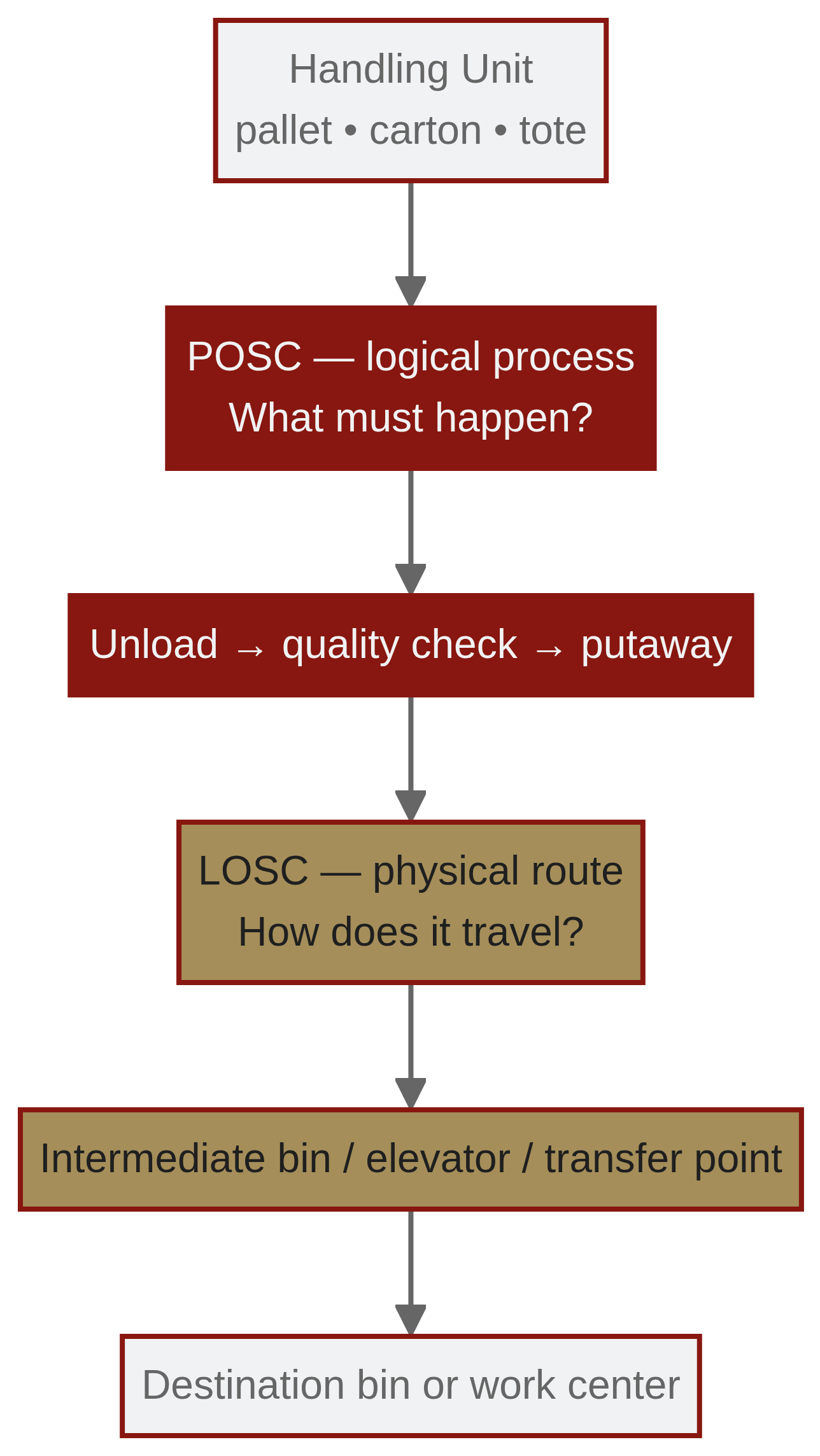
- POSC (Process-Oriented Storage Control) defines the logical sequence of warehouse process steps — the "what" (for example: unloading, counting, quality inspection, putaway). POSC is driven by the Warehouse Process Type (WPT) for inbound and the Warehouse Order Creation Rule (WOCR) for outbound and exclusively works with Handling Units (HUs).
- LOSC (Layout-Oriented Storage Control) determines the physical routing — the "how" — using intermediate storage bins or identification points to adapt flows to the warehouse layout (for example: transfer points, elevators, or staging areas).
- SAP EWM evaluates and executes POSC first to decide what must happen, and then LOSC to determine the physical path to carry it out.