SAP
AMS
Atlassian
Products
Industries & Expertise
BEST-SHORING
SALESFORCE

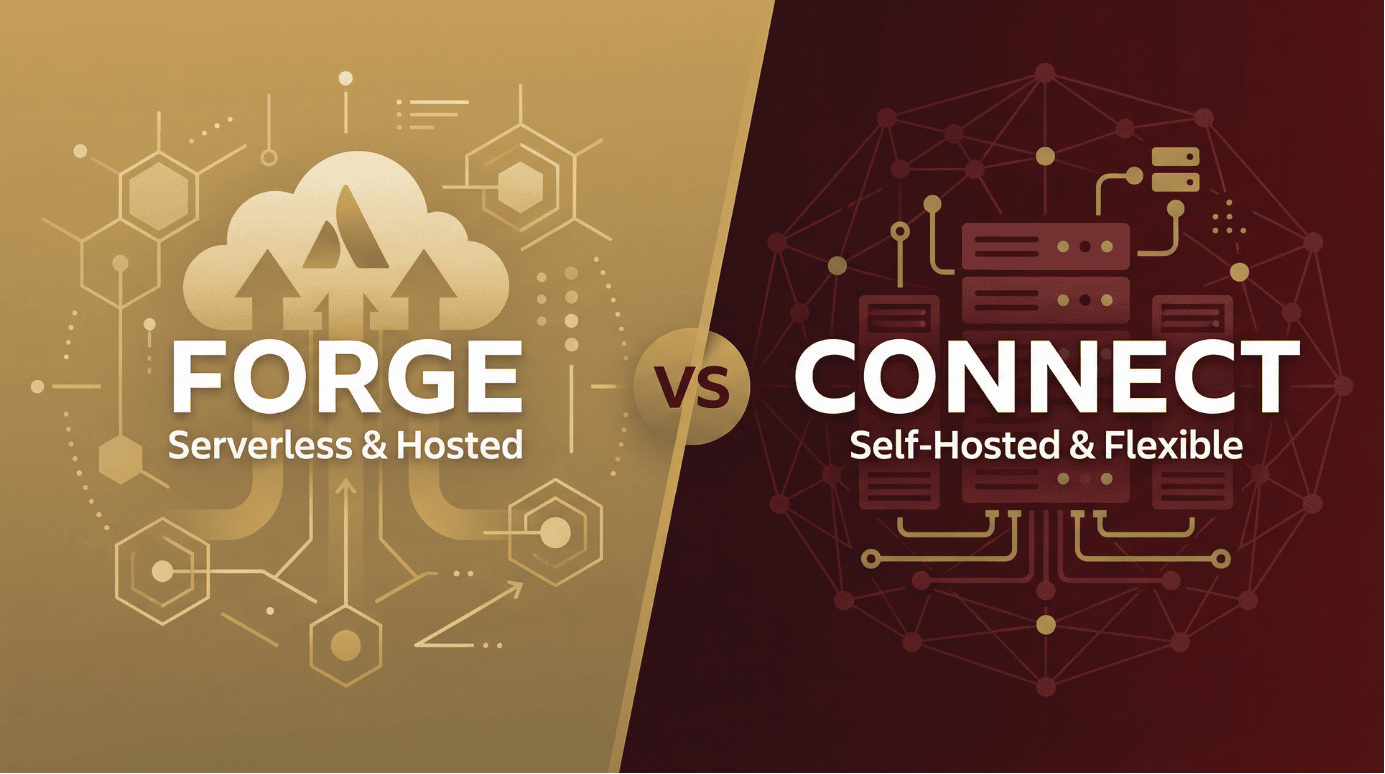
For years, Atlassian developers have had two primary frameworks for building apps for Jira and Confluence Cloud: Connect and Forge. While both enable powerful extensions, they represent fundamentally different approaches to app development. With Atlassian's strategic shift towards Forge, understanding the distinction is more critical than ever for developers, architects, and technology leaders.
So, what is the difference between Forge and Connect? Atlassian Forge is a modern, serverless development platform where apps are hosted and run entirely within Atlassian's infrastructure, offering enhanced security and simplified operations. In contrast, Atlassian Connect is a flexible framework that allows developers to host their apps on their own infrastructure, providing greater control over the technology stack but requiring more operational overhead.
As of 2026, this choice has become much clearer. Atlassian has announced a phased end-of-support for Connect, making Forge the definitive future of cloud app development on the Atlassian platform. This guide will provide a detailed comparison of Forge and Connect, explore the strategic reasons behind Atlassian's decision, and offer a clear path forward for developers building cloud apps in 2026.
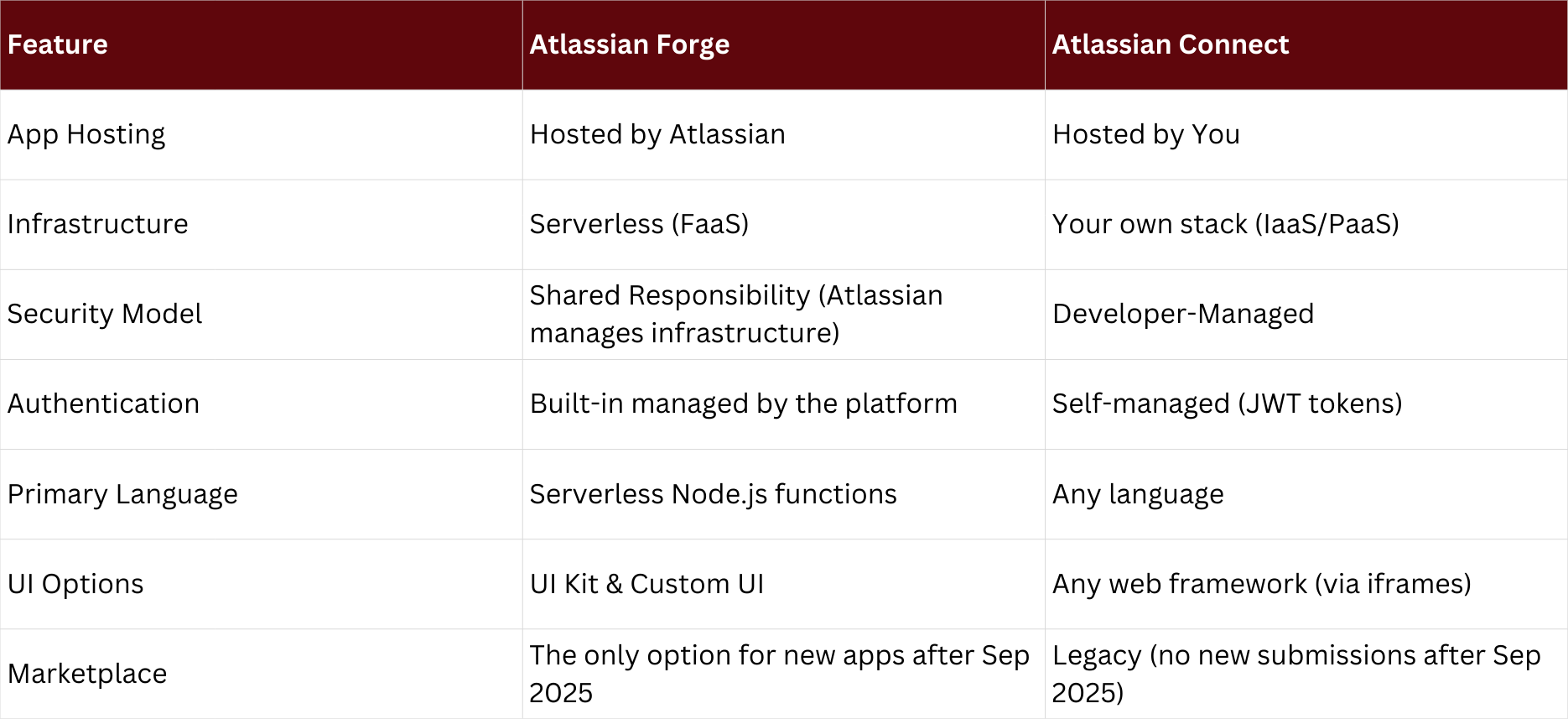
In a significant announcement for the developer community, Atlassian has laid out a clear timeline for the future of its cloud development platforms. Starting from September 17, 2025, only Forge apps can be submitted to the Atlassian Marketplace, and all new extensibility features will be delivered exclusively on the Forge platform.
This decision underscores Atlassian's commitment to a more secure, scalable, and streamlined development experience. By hosting apps within its own trusted infrastructure, Atlassian can provide a higher level of security and reliability, reducing the burden on developers and ensuring a more consistent experience for users.
For a long time, Atlassian Connect was the go-to framework for cloud app development. Its primary advantage was its flexibility. Developers could:
However, this flexibility came with significant responsibilities. Developers were solely responsible for managing their app's infrastructure, security, and compliance. This included handling authentication (typically with JWT tokens), ensuring data privacy, and scaling the app to meet user demand.
Forge represents a paradigm shift in Atlassian app development. It is a serverless, Function-as-a-Service (FaaS) platform designed to simplify the development process and enhance security. With Forge, Atlassian handles the heavy lifting, allowing developers to focus on innovation.
To make the differences clear, here is a direct comparison of the two platforms:
For developers with existing Connect apps, the message from Atlassian is clear: it's time to plan your migration to Forge. Atlassian is committed to supporting this transition and has provided a wealth of resources to help.
Atlassian supports an incremental adoption path, allowing developers to gradually migrate their apps from Connect to Forge. This "Connect on Forge" approach enables you to replace individual Connect modules with Forge modules, allowing for a phased migration that minimizes disruption. For example, you can start by migrating a single Confluence macro or Jira panel to Forge while the rest of your app remains on Connect.
The strategic direction from Atlassian is unequivocal: Forge is the future. While Connect has served the community well, the move to a hosted, secure, and serverless platform offers undeniable advantages for both developers and users. The deadline of September 2025 for new Marketplace apps marks a pivotal moment, urging the developer community to embrace Forge.
For developers starting new projects, the choice is simple: build on Forge. For those with existing Connect apps, the time to plan and begin your migration is now. By leveraging the power and security of the Forge platform, you can build more resilient, scalable, and trusted apps that will continue to thrive in the Atlassian ecosystem for years to come.

What is Atlassian Guard? It's Atlassian's cloud security solution that provides data lo

Managing hundreds of microservices? Atlassian Compass is an internal developer platform

A connected enterprise is what we all strive for. But how can silos between Atlassian a