SAP
AMS
Atlassian
Products
Industries & Expertise
BEST-SHORING
SALESFORCE


A successful migration to SAP S/4HANA is more than a technical upgrade; it is a strategic business transformation. One of the most critical—and often underestimated—workstreams in this journey is the adaptation of custom ABAP code. Years of custom developments, while essential for business operations in SAP ECC, can become a major roadblock if not addressed with a structured, strategic approach. This ultimate checklist provides a phase-by-phase blueprint to navigate the complexities of custom code adaptation, ensuring a smooth, efficient, and future-proof transition to S/4HANA.
SAP S/4HANA is not just a new version of ECC; it is built on a fundamentally different architecture. The in-memory HANA database, a simplified data model (like the Universal Journal), and the mandatory Business Partner model mean that custom code written for ECC will simply not work as expected. Attempting to migrate without proper adaptation will lead to syntax errors, functional failures, and poor performance.
A proactive adaptation strategy is essential to mitigate these risks and unlock the full potential of S/4HANA.
This checklist breaks down the custom code adaptation process into five manageable phases, from initial analysis to post-migration optimization.
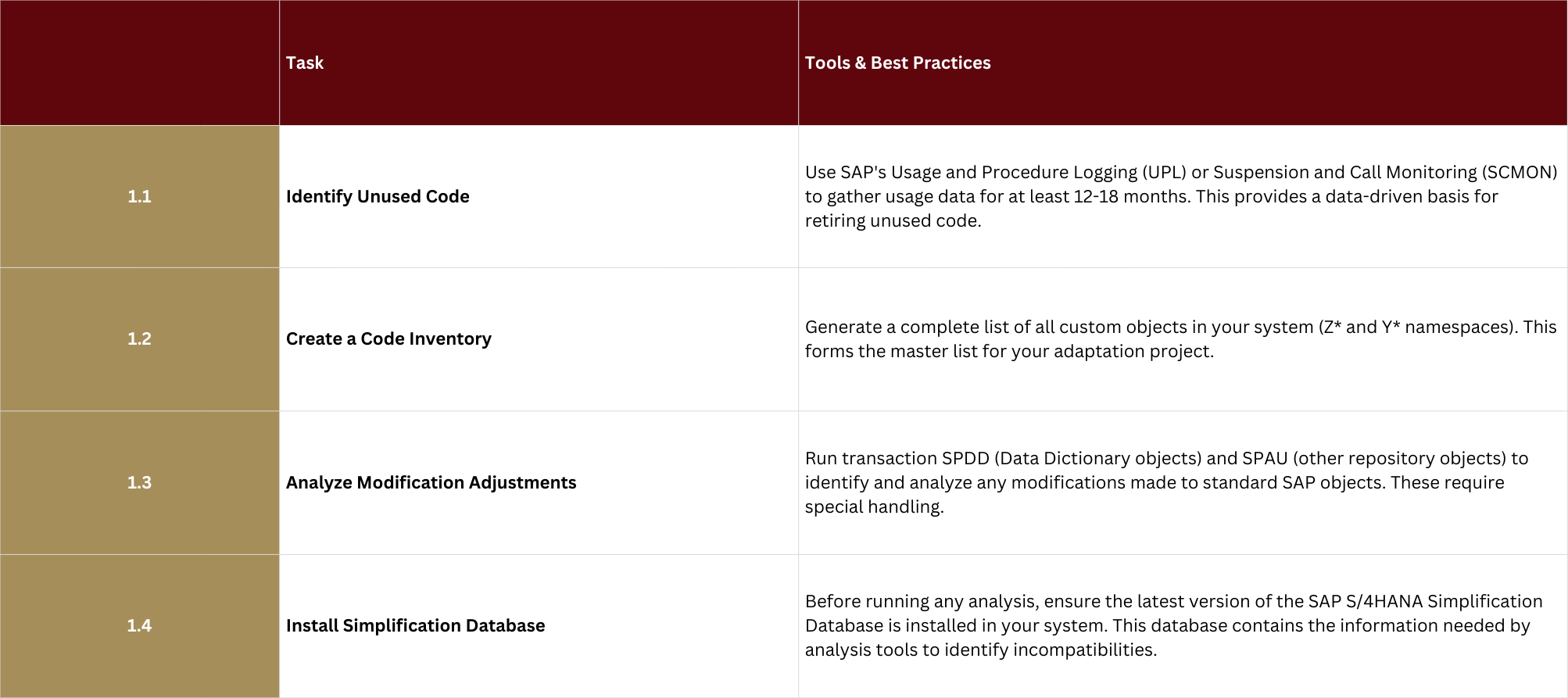
The goal of this initial phase is to understand the full scope of your custom code landscape and to separate the essential from the obsolete. Don't waste time adapting code that is no longer used.
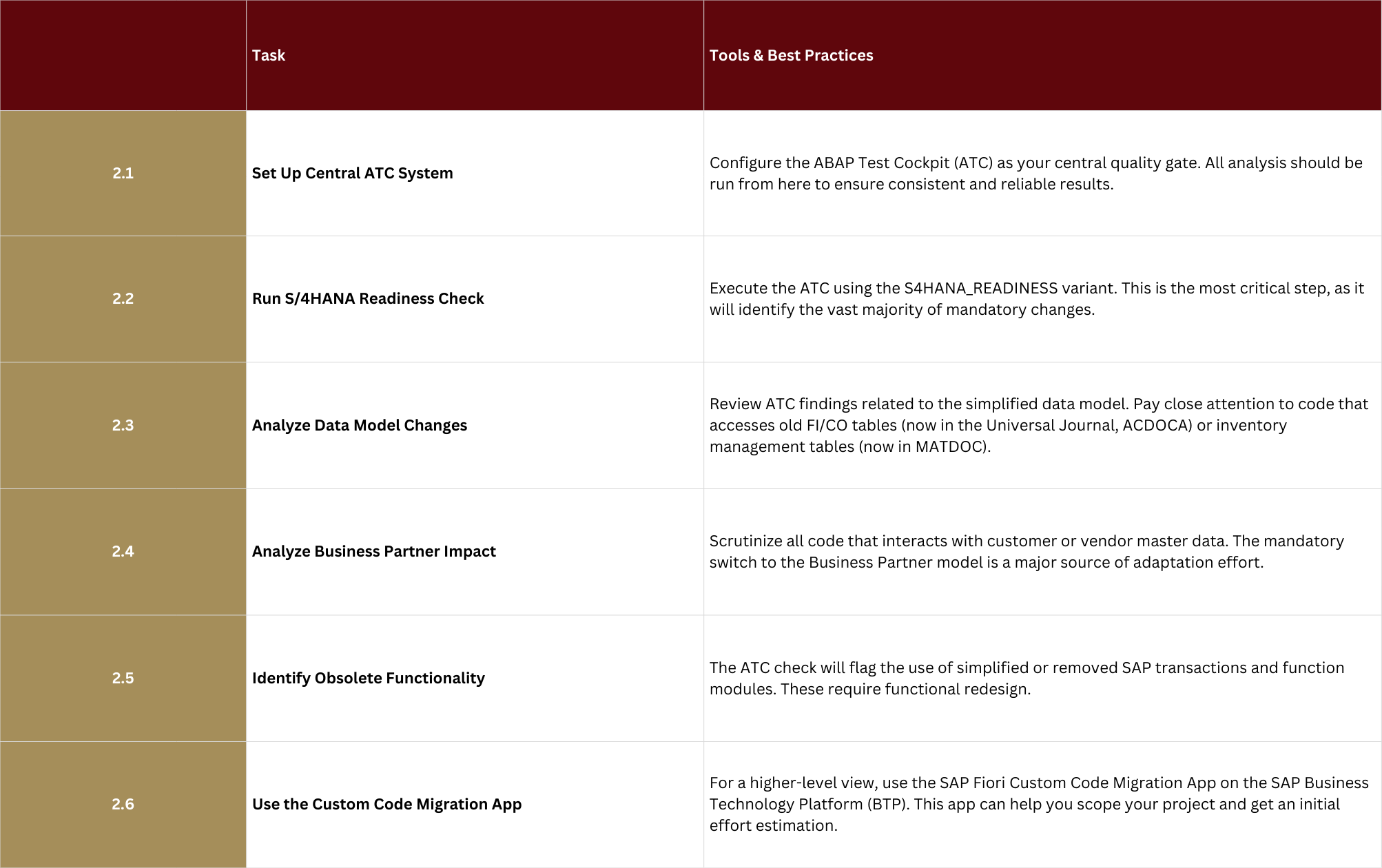
With a clear scope, the next step is to analyze which objects will be impacted by the S/4HANA architecture and why. This is where you identify the specific technical challenges.
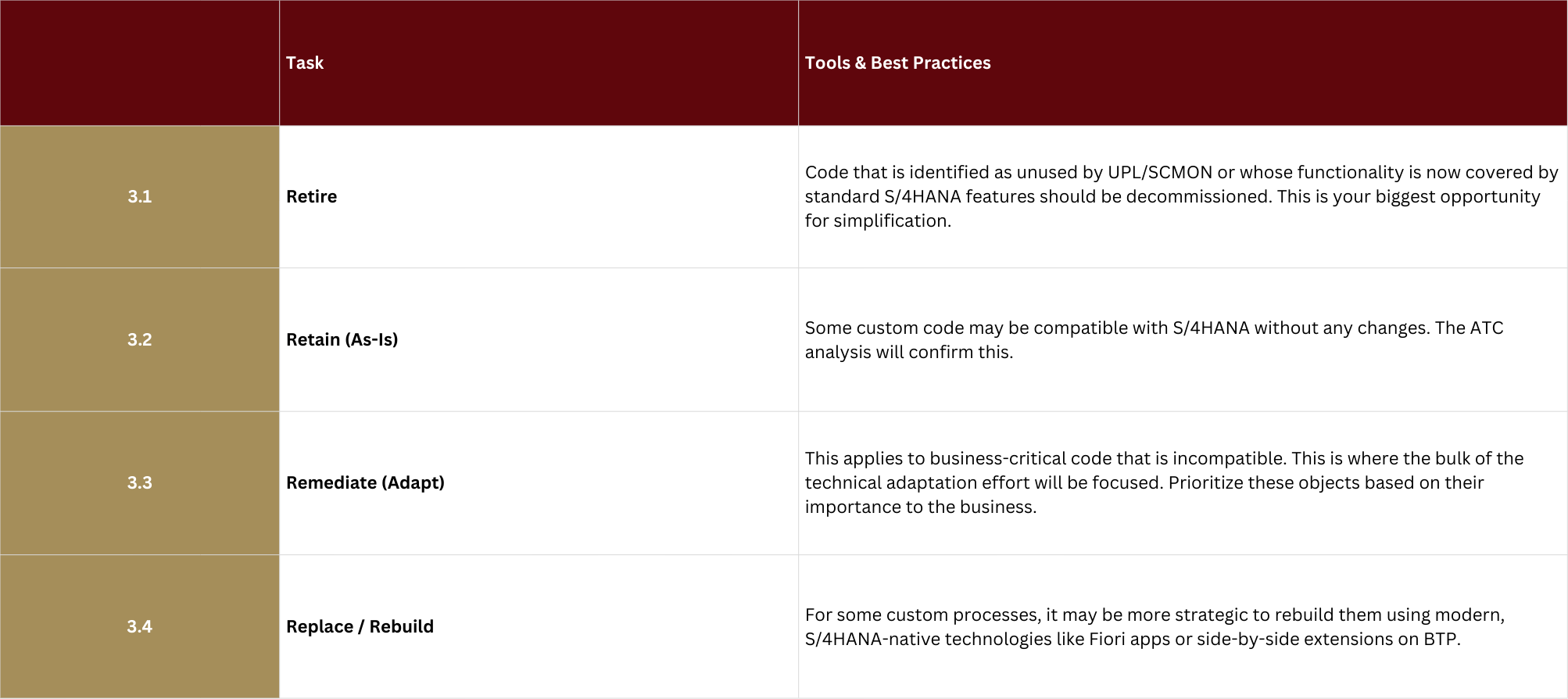
Not all custom code is created equal. Based on the analysis, you must decide on the right strategy for each object. This phase is about smart decision-making, not just technical work.
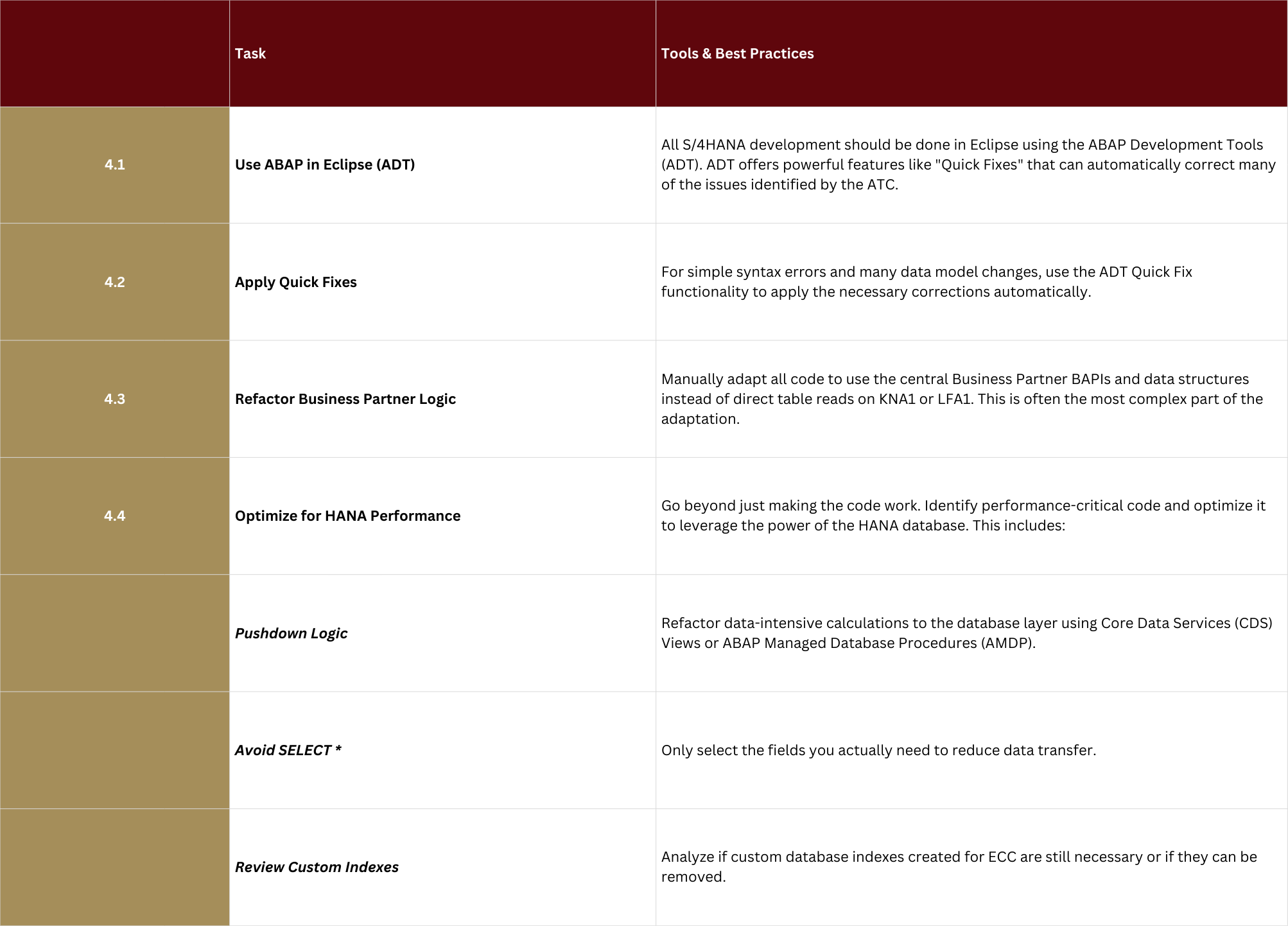
This is the hands-on phase where your development team adapts the code. A modern, efficient development environment is key to success.
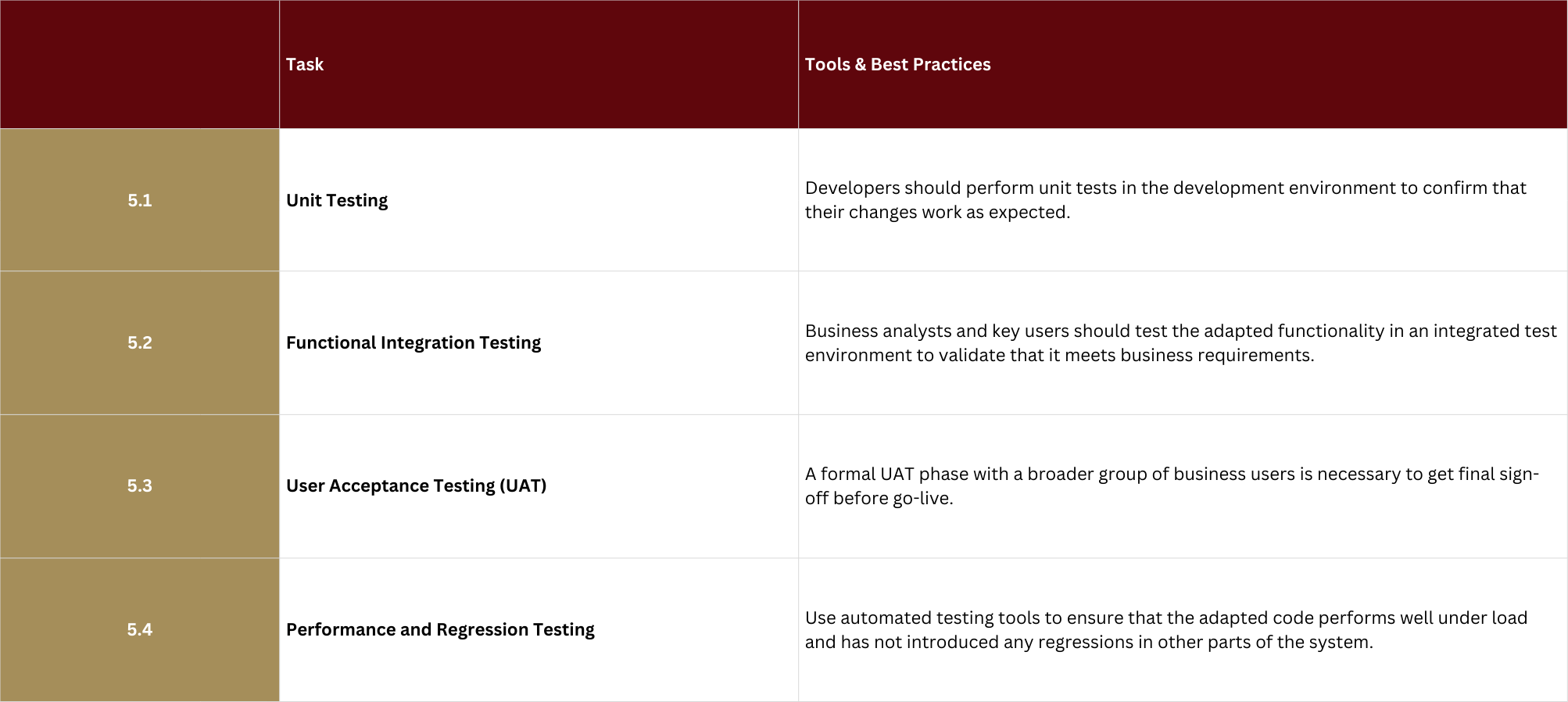
Thorough testing is crucial to ensure that the adapted code functions correctly and performs well in the new S/4HANA environment.
Treating custom code adaptation as a mere technical chore is a recipe for project delays and budget overruns. By following a structured checklist, you can transform this challenge into a strategic opportunity. This is your chance to clean up years of technical debt, retire obsolete code, and modernize your most critical business processes to take full advantage of the power and flexibility of SAP S/4HANA. A well-executed custom code adaptation project doesn't just ensure a stable go-live; it lays the foundation for a more agile, efficient, and innovative enterprise.
The Lupus CCA Toolset delivers clear results, consistent quality checks, and a reliable foundation for your S/4HANA migration.