SAP
AMS
Atlassian
Products
Industries & Expertise
BEST-SHORING
SALESFORCE


Generative Pre-trained Transformers, better known as GPTs, are more than just a technological hype. They are a transformative force that is fundamentally changing business processes, team collaboration, and the way we interact with data. While many companies recognize the potential of artificial intelligence, practical implementation often remains a challenge. How can these powerful language models be concretely used in daily business operations to create real value?
This comprehensive guide for 2025 not only offers you a deep understanding of the technology behind GPTs but also provides practical use cases and strategic insights. We go one step beyond pure theory and show you, using the Atlassian ecosystem as an example, how you as a Lupus Consulting client can seamlessly integrate GPTs into your existing tools like Jira, Confluence, and Jira Service Management. Learn how to increase efficiency, revolutionize knowledge management, and equip your teams for the future of work.
A Generative Pre-trained Transformer (GPT) is an advanced artificial intelligence model specialized in understanding and generating human-like text. At its core, a GPT is a massive neural network that has been trained on a gigantic amount of text data from the internet. This training process, also known as "pre-training," enables the model to learn complex patterns, grammatical structures, factual knowledge, and even stylistic nuances of human language.
The "generative" capability means the model can create new, original content that is coherent and contextually appropriate. It doesn't just replicate information but combines learned patterns to formulate a meaningful and relevant response to a given input (a so-called "prompt"). Unlike older AI models, which were often limited to specific tasks, GPTs are characterized by their enormous flexibility. They can handle a wide range of tasks, from answering questions and writing emails and code to creating creative texts.
For businesses, the relevance of GPTs lies in their ability to automate and accelerate time-consuming, text-based tasks. They act as intelligent assistants that increase productivity, improve internal and external communication, and open up new avenues for data analysis and knowledge management.

To understand the full potential of GPTs, a basic insight into the underlying technology is helpful. The magic of these models is based on two central concepts: the Transformer architecture and a two-stage training process.
The Transformer architecture, introduced by Google researchers in 2017, was a paradigm shift in the processing of sequential data like text. Its crucial breakthrough is the Self-Attention mechanism. Unlike previous models that had to process text word by word sequentially, self-attention allows a GPT to weigh and understand the relationships between all words in a sentence simultaneously. The model recognizes which words are most important for the context of a specific word, regardless of their position in the sentence. This enables a much deeper and more nuanced understanding of language.
Another advantage is parallel processing. Since each word no longer needs to be processed individually, the Transformer architecture can be trained extremely efficiently on modern hardware (GPUs), which made the development of models with hundreds of billions of parameters possible in the first place.

The training of a GPT model takes place in two main phases, which transform it from a raw language model into a useful tool:
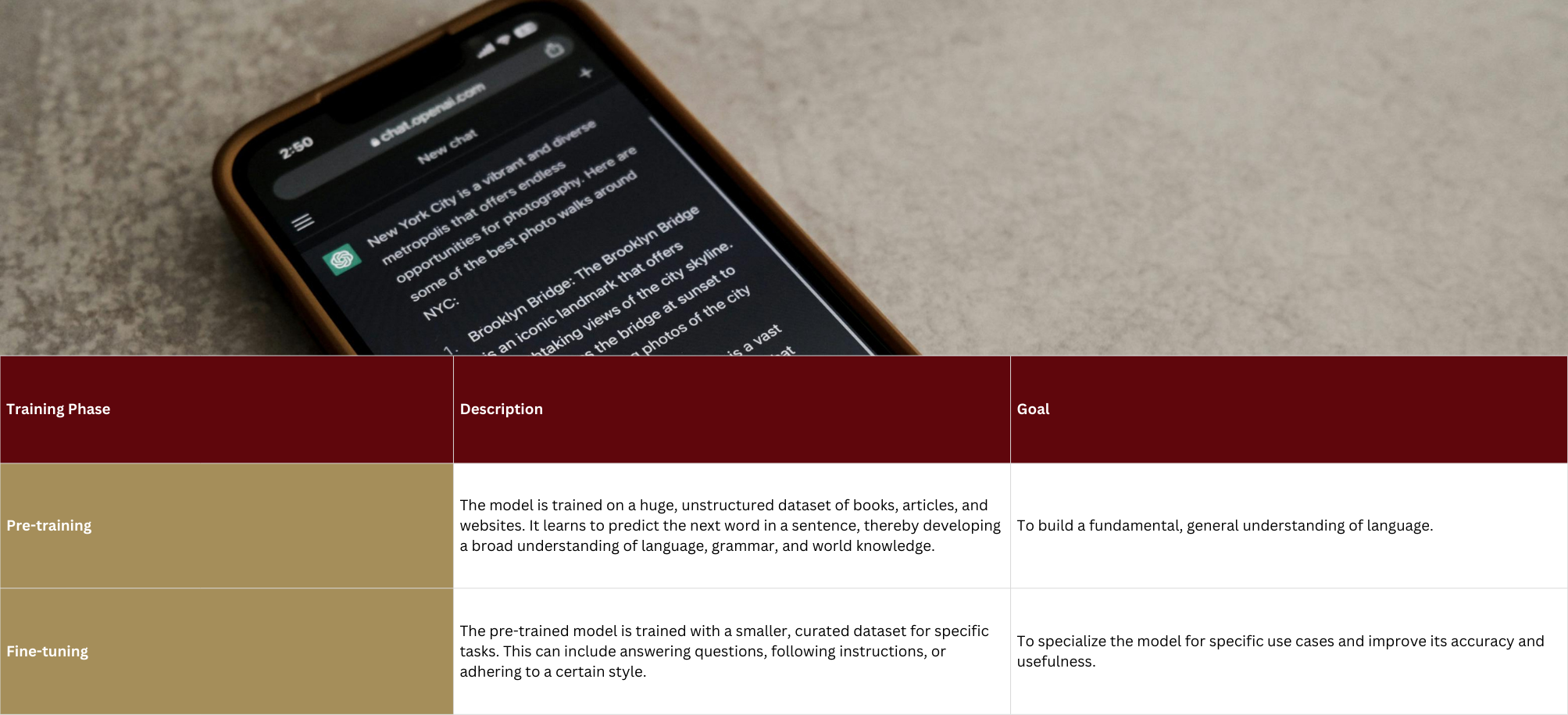
An important aspect of fine-tuning is Reinforcement Learning from Human Feedback (RLHF). In this process, human trainers rate the model's responses to teach it which kind of answers are preferred. This process helps to significantly increase the model's safety, accuracy, and helpfulness.
Since the introduction of the first GPT model, the landscape of language models has evolved rapidly. An understanding of the different models and their capabilities is crucial to making the right choice for your business.
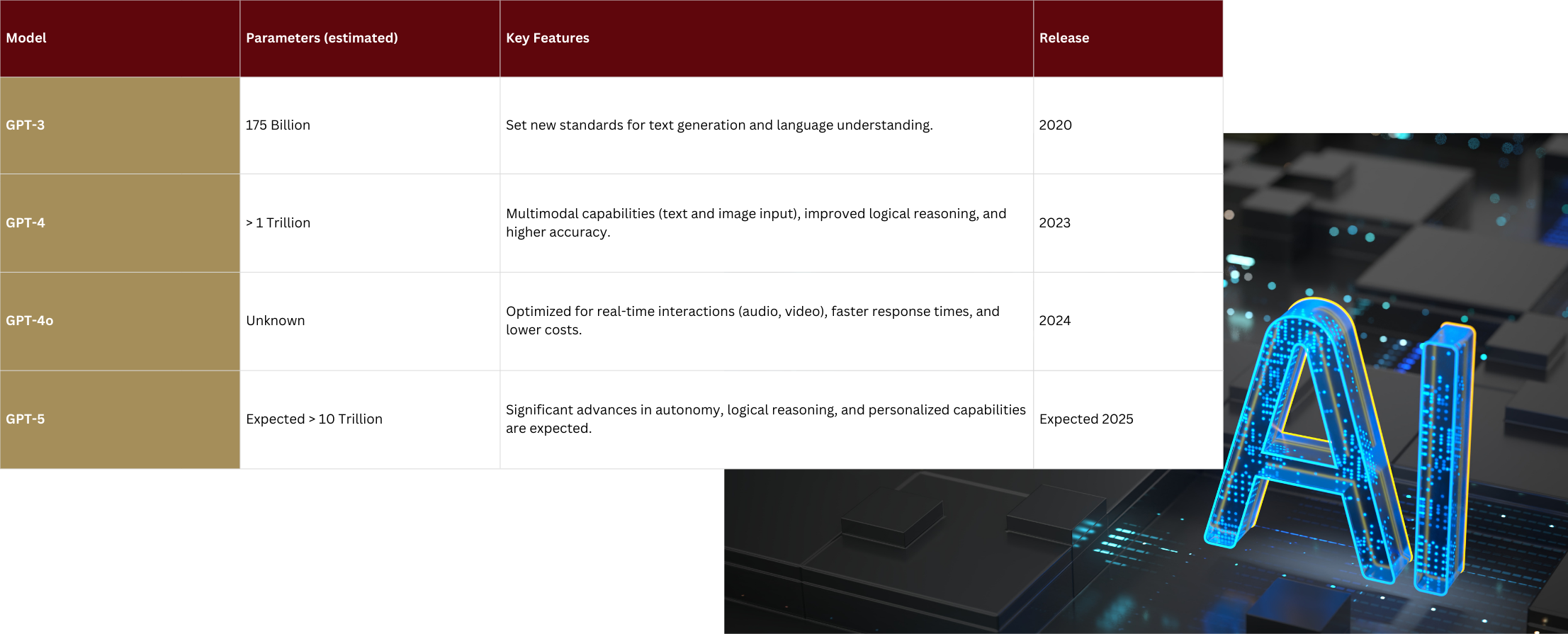
OpenAI has significantly driven progress in generative AI with its GPT series. Each new version brought significant improvements.
Besides OpenAI, other technology giants have also developed powerful language models, each with its own strengths.
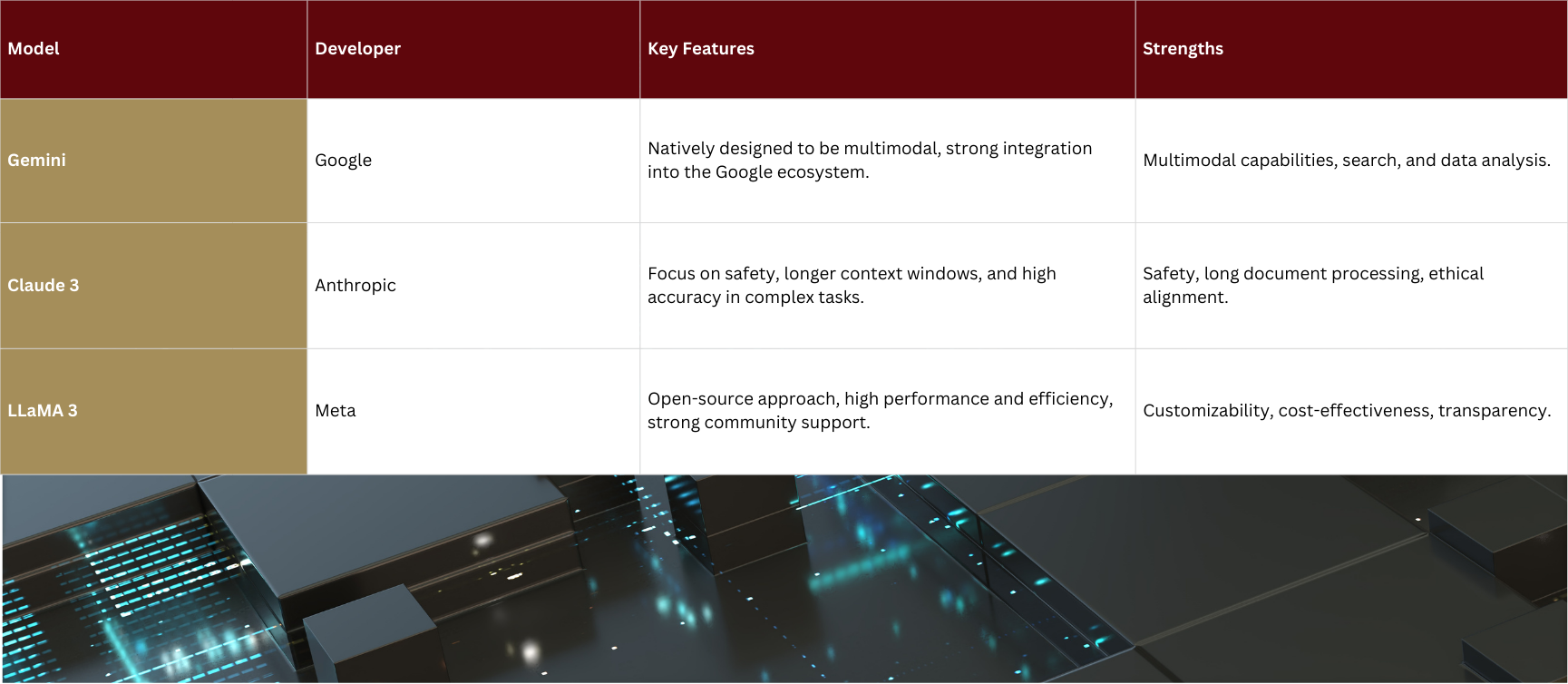
The choice of the right model depends heavily on the specific use case, budget constraints, and requirements for security and customizability. While OpenAI models are often considered all-rounders, alternatives like Claude or LLaMA offer decisive advantages in specialized areas.
The theoretical foundations of GPTs are impressive, but their true value unfolds in practical application. Generative AI can optimize processes and unlock new potential in almost every department of a company. Here are some of the most impactful use cases:
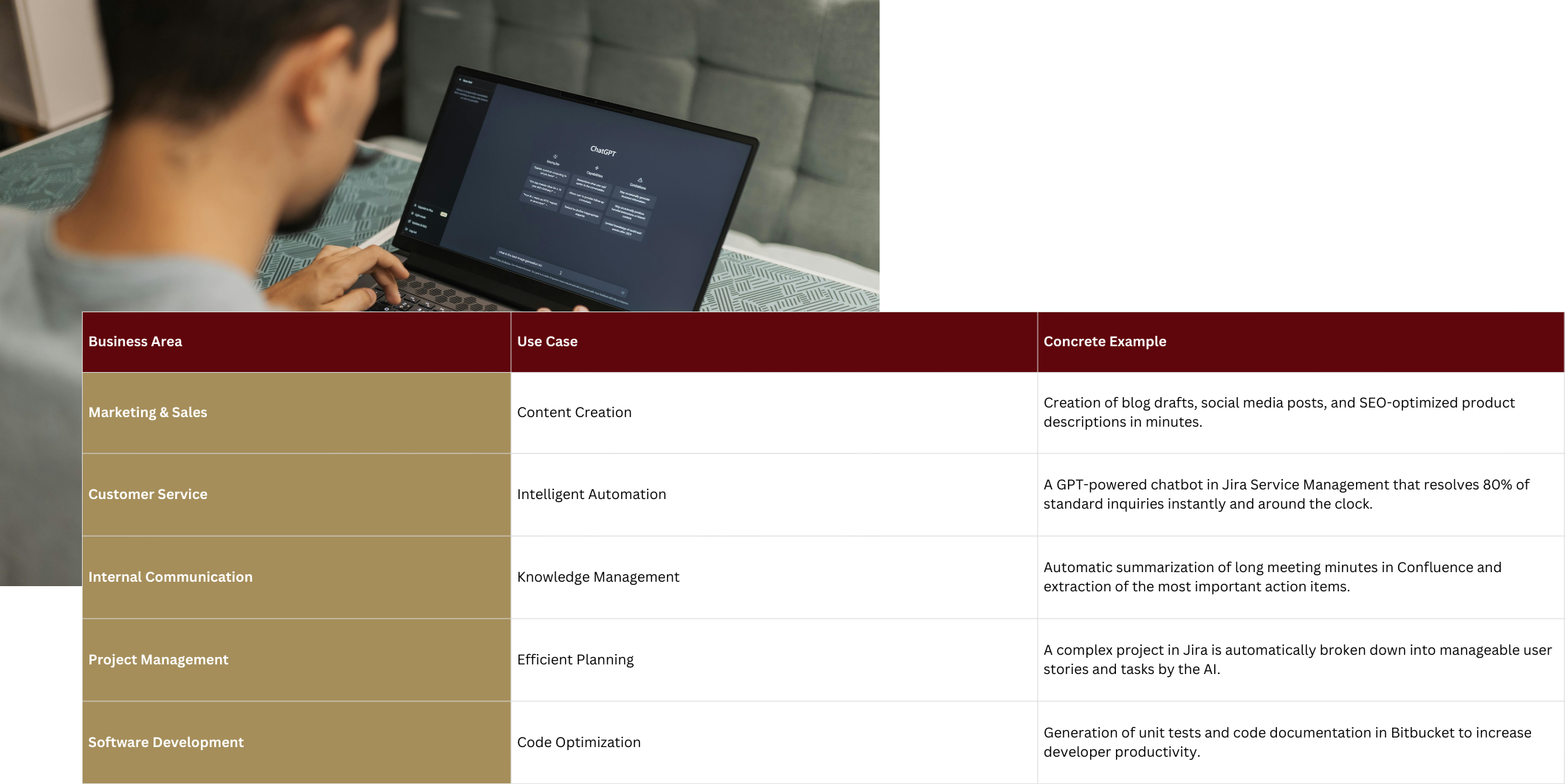
As experts in Atlassian solutions at Lupus Consulting, we know that the best technology is only as good as its integration into daily workflows. This is exactly where the power of GPTs and the central role that Atlassian tools play in many companies come together. Instead of creating isolated solutions, you can use AI directly in Jira, Confluence, and Jira Service Management (JSM).
With Atlassian Intelligence, Atlassian has created its own AI solution that is deeply integrated into its cloud products. It is more than just a ChatGPT interface; it uses the so-called Teamwork Graph to understand the unique context of your company – your projects, teams, and internal language – and deliver highly relevant results based on it.
"Atlassian Intelligence is your virtual teammate, helping you accelerate work, unlock insights, and bring your best ideas to life."
Source: Atlassian
Imagine being able to formulate complex Jira queries in natural language instead of struggling with JQL. Atlassian Intelligence makes it possible. Simply ask: "Which critical bugs are assigned to team 'Alpha' and have been open for more than 14 days?" and get an immediate answer. Other groundbreaking features include:
With GPT integration, Confluence becomes a dynamic knowledge hub. Instead of starting from scratch, you can use the AI to create initial drafts for blog articles, project documentation, or meeting agendas. Particularly valuable is the ability to summarize content from various sources and present it in a new format.
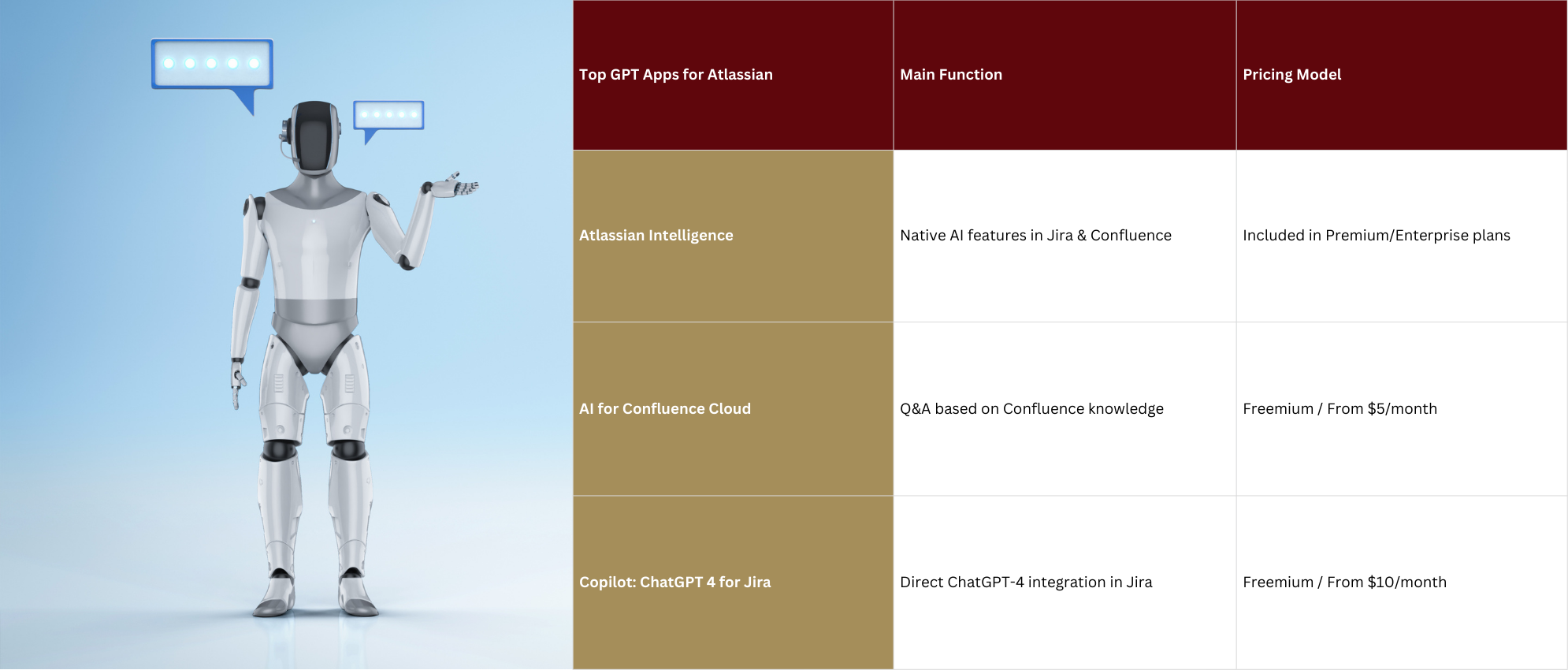
In the service desk, AI unfolds its full potential. The virtual agent of JSM, powered by Atlassian Intelligence, can handle a large number of inquiries autonomously. It not only answers questions but also suggests relevant articles from the knowledge base and, if necessary, can escalate the ticket to a human agent with a precise summary. Companies report a reduction in manually processed tickets by up to 85%.
The introduction of GPTs is not just an IT project, but a strategic initiative. A structured approach is crucial for success. Our proven implementation roadmap helps you set the right course.

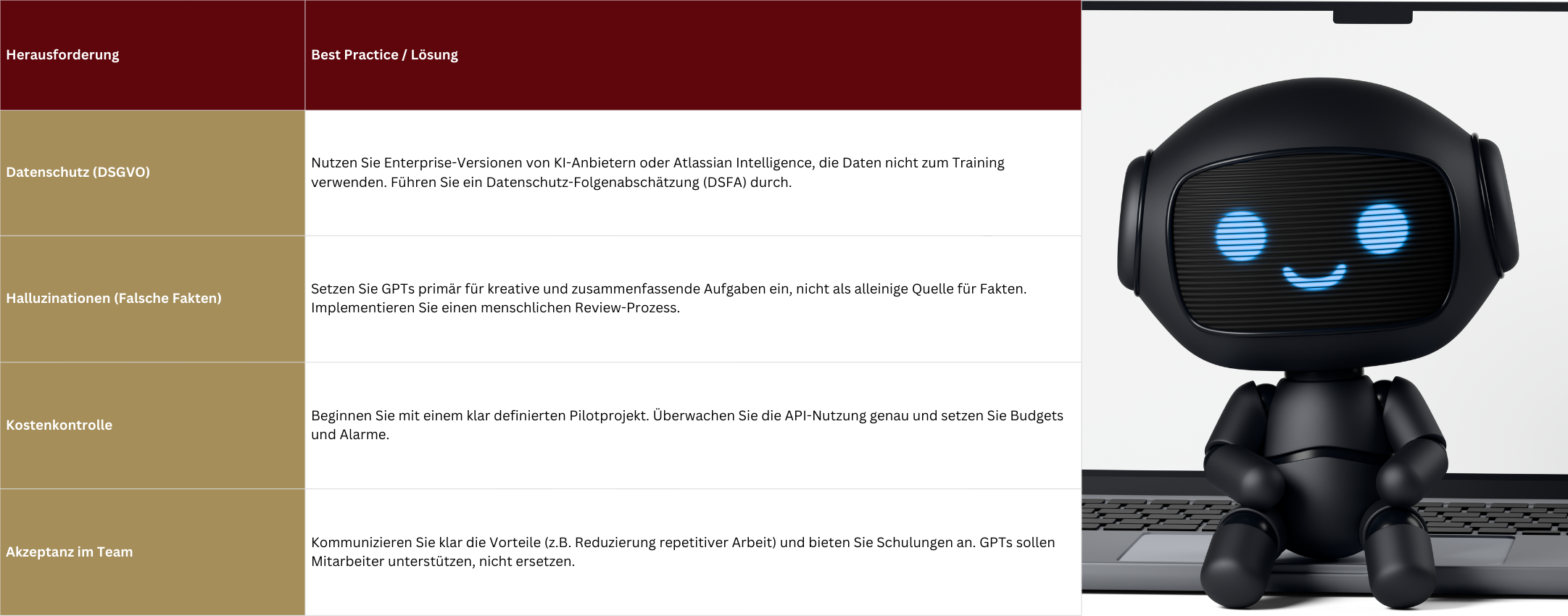
The use of GPTs offers enormous opportunities, but also challenges. A conscious and strategic approach is essential.
The development of GPTs continues to accelerate. We are at the beginning of an era in which AI will become a ubiquitous, invisible partner in almost every software. Future models will not only understand and generate text, but also images, audio, and video seamlessly. For companies, this means that the foundations for AI integration being laid now will be a decisive competitive advantage for years to come.
Generative Pre-trained Transformers are one of the most significant technological developments of our time. They offer companies an unprecedented opportunity to increase efficiency, foster innovation, and improve collaboration. The key to success lies not in waiting and observing, but in actively shaping. By integrating GPTs into central collaboration tools like Jira and Confluence, you can deploy the technology where the work actually happens.
What is the difference between GPT and ChatGPT?
GPT (Generative Pre-trained Transformer) is the underlying technology, a large language model. ChatGPT is a specific application from OpenAI based on a GPT model and optimized for dialogue.
Is my data secure when I use GPTs?
When using public versions (e.g., free ChatGPT), your data can be used for training. With business and enterprise solutions (e.g., ChatGPT Enterprise, Atlassian Intelligence), this is contractually excluded. A careful review of the data protection regulations is essential.
How much does the implementation of GPTs cost?
The costs vary greatly. They range from monthly license fees for marketplace apps (from approx. €5-10 per user) to usage-based costs for API calls. In addition, there are internal costs for implementation and training.
Can I integrate GPTs into my on-premise Atlassian instance?
Most modern AI integrations, including Atlassian Intelligence, are primarily available for the cloud versions. For on-premise solutions, there are specialized apps, but they are often more complex to set up.
How do I deal with "hallucinations" (false information) from the AI?
Establish a "human-in-the-loop" process in which critical or externally published content is reviewed by a human. Use the AI as an assistant, not as the sole source of truth.


Smarter Search, Better Dashboards: Unlock the full power of Jira with Smart Filters and